Why your woodworking projects fall apart (and it's usually not you)
Quick answer
Most failed woodworking projects trace back to incomplete plans, missing cut lists, wood movement, compounding measuring errors, weak joints, and skipped dry fits. Each has a practical fix. Check any plan, free or paid, against a simple checklist before you cut.
We may earn a commission from links on this page, at no extra cost to you. Disclosure
You followed the plan. You measured, cut, glued, and clamped. Then the table rocked on the kitchen floor, the drawer stuck, and there was a gap in the corner you could slide a nickel into.
Most people blame their own hands. In our research, a large share of these failures trace back to the plan itself, or to a handful of habits nobody explains to beginners. Here is what usually goes wrong, and how to fix each one.
The usual ways a project goes sideways
The symptoms are familiar to almost anyone who has built a few pieces:
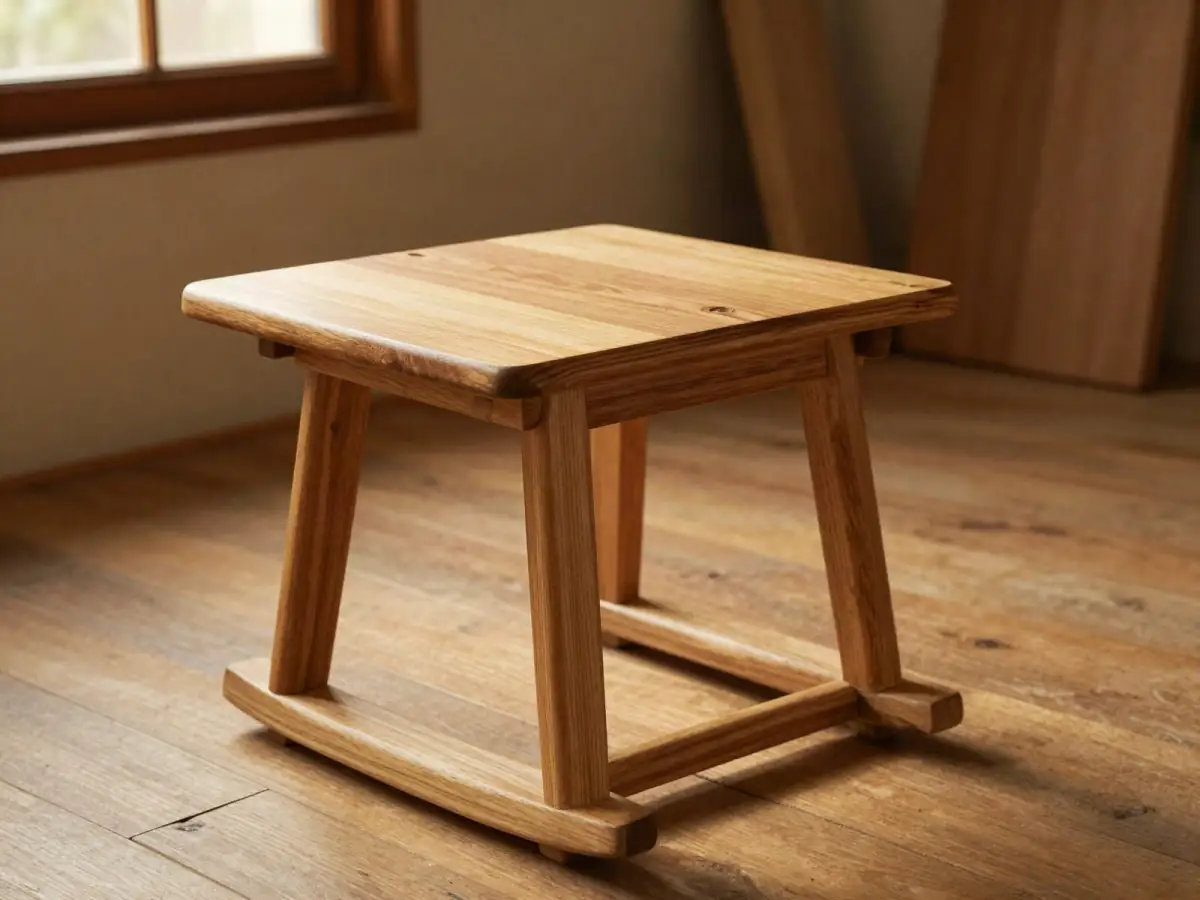
- A table or stool that wobbles no matter how you shim it.
- Miter and butt joints that open up into visible gaps.
- A pile of offcuts and a second trip to the lumberyard.
- A cut list whose numbers don't add up to the drawing.
- A step that assumes you own a jointer, dado stack, or router table.
None of these mean you lack talent. They mean information was missing at the point you needed it.
Cause 1: The plan is incomplete or wrong
Search "woodworking plans missing measurements" and you will find plenty of forum threads from frustrated builders. Common gaps: a drawing with overall dimensions but no part sizes, joinery shown but not dimensioned, or a scan so blurry the fractions are guesswork.
Fix: Before you buy lumber, read the whole plan once and mark every dimension you would need to cut each part. If you can't find a number, stop and work it out on paper first. Sketching the piece at full scale on cardboard or plywood catches a surprising number of errors.
Cause 2: No cut list, or one that doesn't match
A cut list turns a drawing into shopping and sawing instructions. Without one, people buy the wrong board lengths, cut parts in the wrong order, and run short on the last piece.
Fix: Build your own if the plan lacks one. List every part with thickness, width, length, and quantity, then add each part's length against the drawing. Plan which parts come from which board before cutting. Our guide on how to read a cut list walks through it.
Paid link · opens the vendor's sales page.
Cause 3: Ignoring wood movement
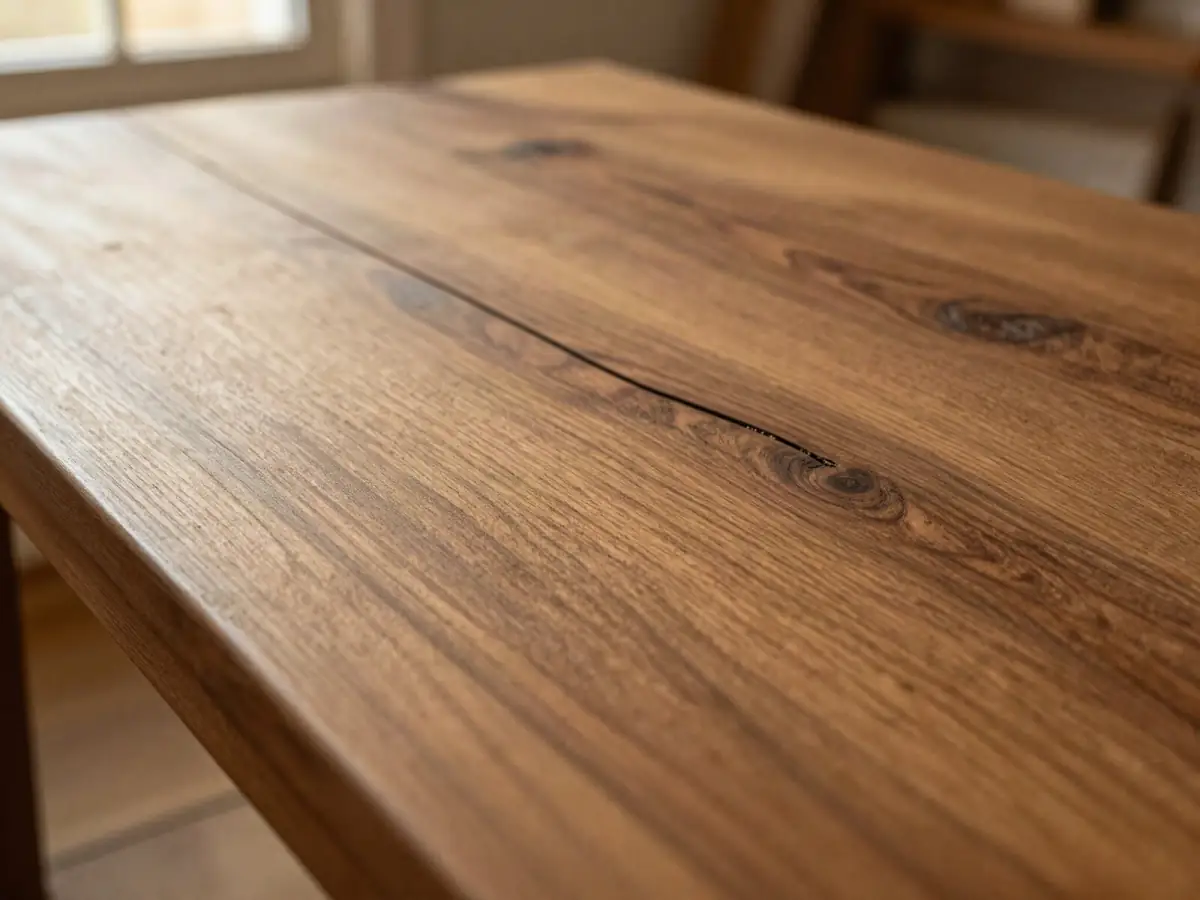
Wood swells and shrinks as humidity changes, and it does so almost entirely across the grain, not along its length. Movement along the length is tiny. Across a wide board, especially a flatsawn one, it can be enough to crack a panel or push a joint apart over one season.
The USDA Forest Products Laboratory's Wood Handbook documents this: tangential shrinkage (along the growth rings) is typically about twice the radial shrinkage. That is why flatsawn boards cup and quartersawn boards stay calmer.
What to do about it
- Never glue a solid tabletop rigidly to its apron. Use tabletop fasteners, figure-8 clips, or elongated screw holes.
- Let solid panels float in their frame grooves instead of gluing them.
- Let lumber sit in your shop for a week or two before milling so it settles to your conditions.
- Avoid long cross-grain glue joints, such as gluing a breadboard end along its full length.
A plan that shows a glued-down solid tabletop is a plan that hasn't accounted for the next humid summer.
Cause 4: Measuring and squaring errors that compound
A 1/32" error doesn't sound like much. Repeat it across eight cuts, add a blade that isn't quite at 90 degrees, and a cabinet ends up out of square by a visible amount.
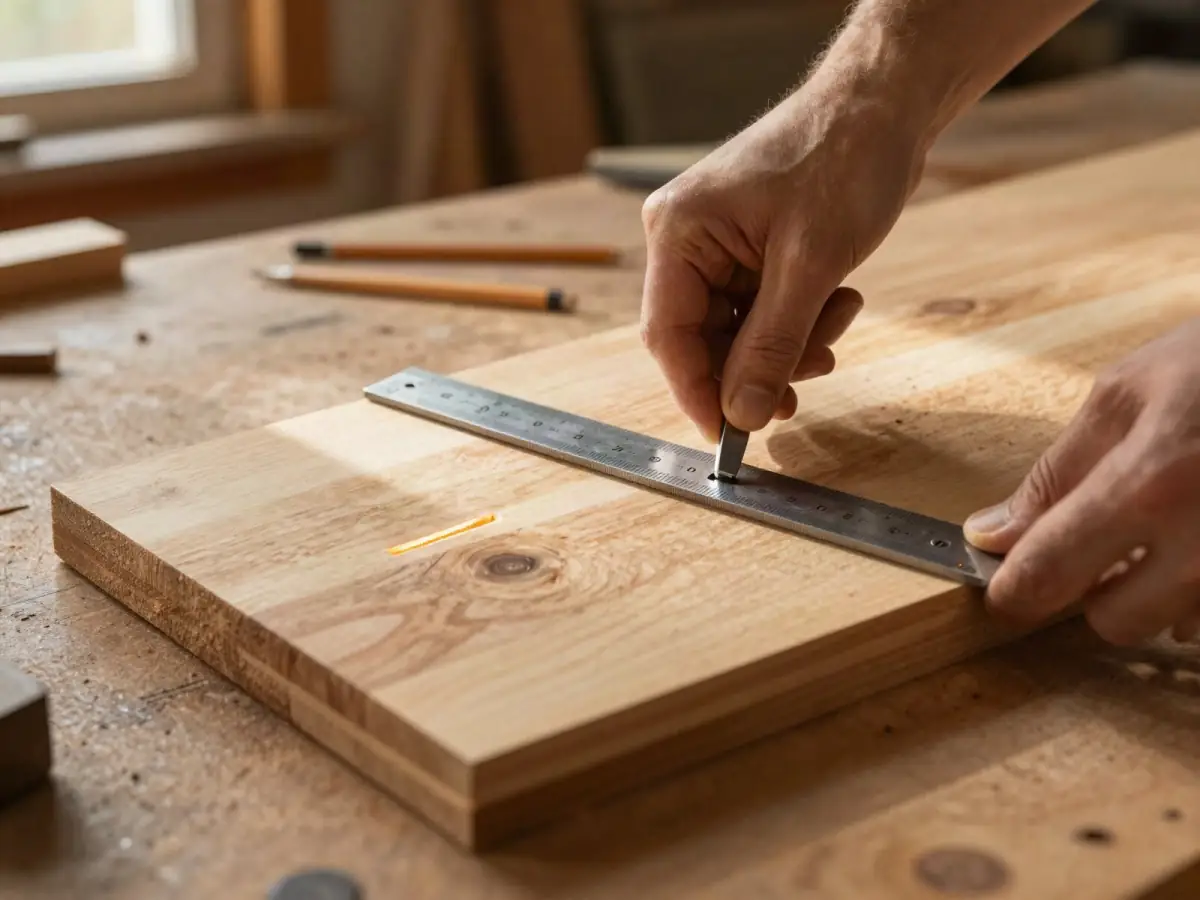
Fix:
- Use one tape measure or rule for the whole project. Two tapes rarely agree exactly.
- Check your saw and square against a known reference before you start.
- Cut matching parts at the same setting, in one session, using a stop block.
- Measure diagonals at glue-up. Equal diagonals mean the assembly is square.
- Where possible, mark parts from the actual piece rather than from the plan's number.
Cause 5: The wrong joint for the load
Butt joints with a couple of screws work fine for a shop shelf. On a chair leg, a bed rail, or a table apron, they loosen quickly because the joint is being racked every time someone leans on it.
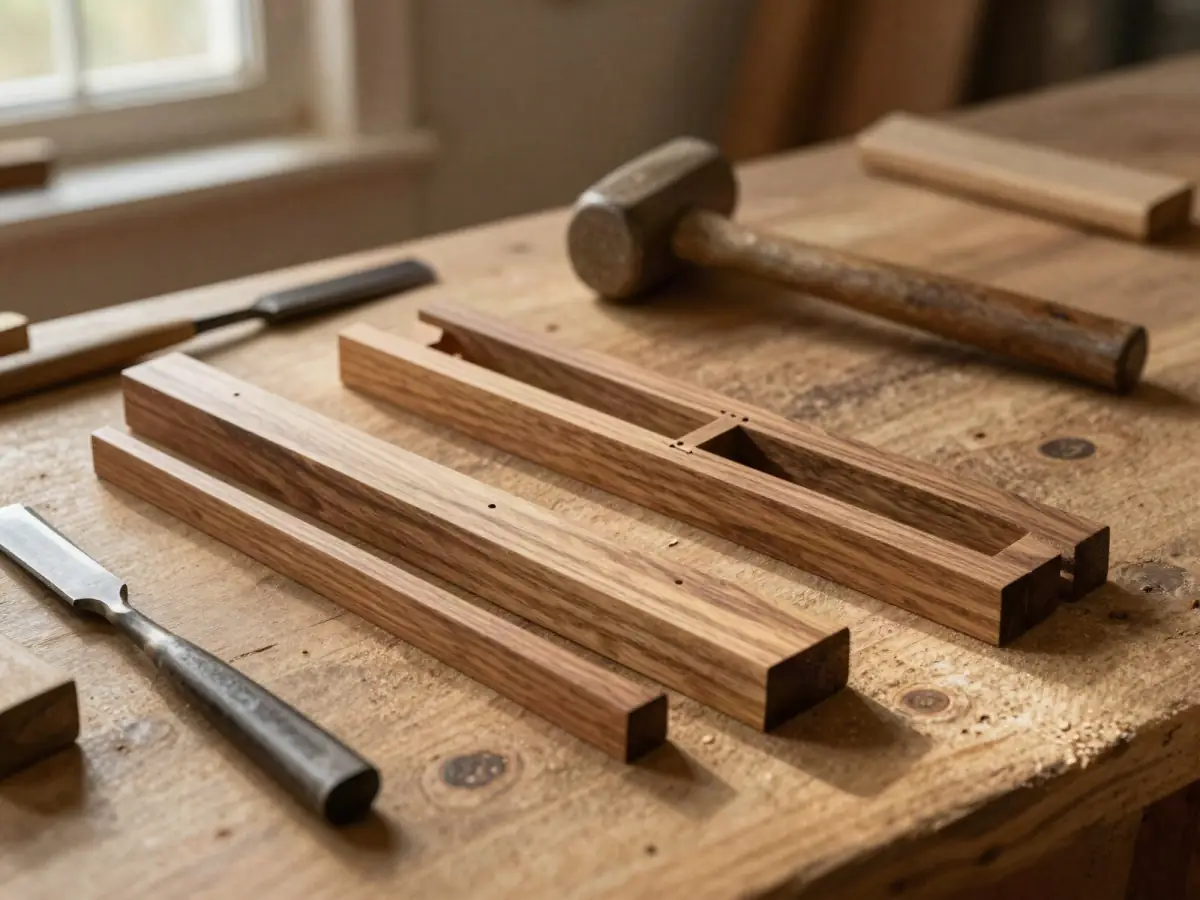
Fix: Match the joint to the stress. Mortise and tenon, dowels, or pocket screws plus glue resist racking on frames. Dadoes and rabbets carry shelf loads better than screws into end grain. Corner blocks and stretchers add stiffness to tables. If a plan specifies a weak joint for a load-bearing part, upgrade it.
Cause 6: Skipping the dry fit
Glue gives you a few minutes of working time. That's not the moment to discover a tenon is too fat or that the clamps don't reach.
Fix: Assemble everything without glue first. Check fit, check square, and set out every clamp you'll need. Label parts and joint faces with a pencil triangle so they go back together the same way. Then take it apart and glue in stages if the assembly is large.
Paid link · opens the vendor's sales page.
What a good woodworking plan includes
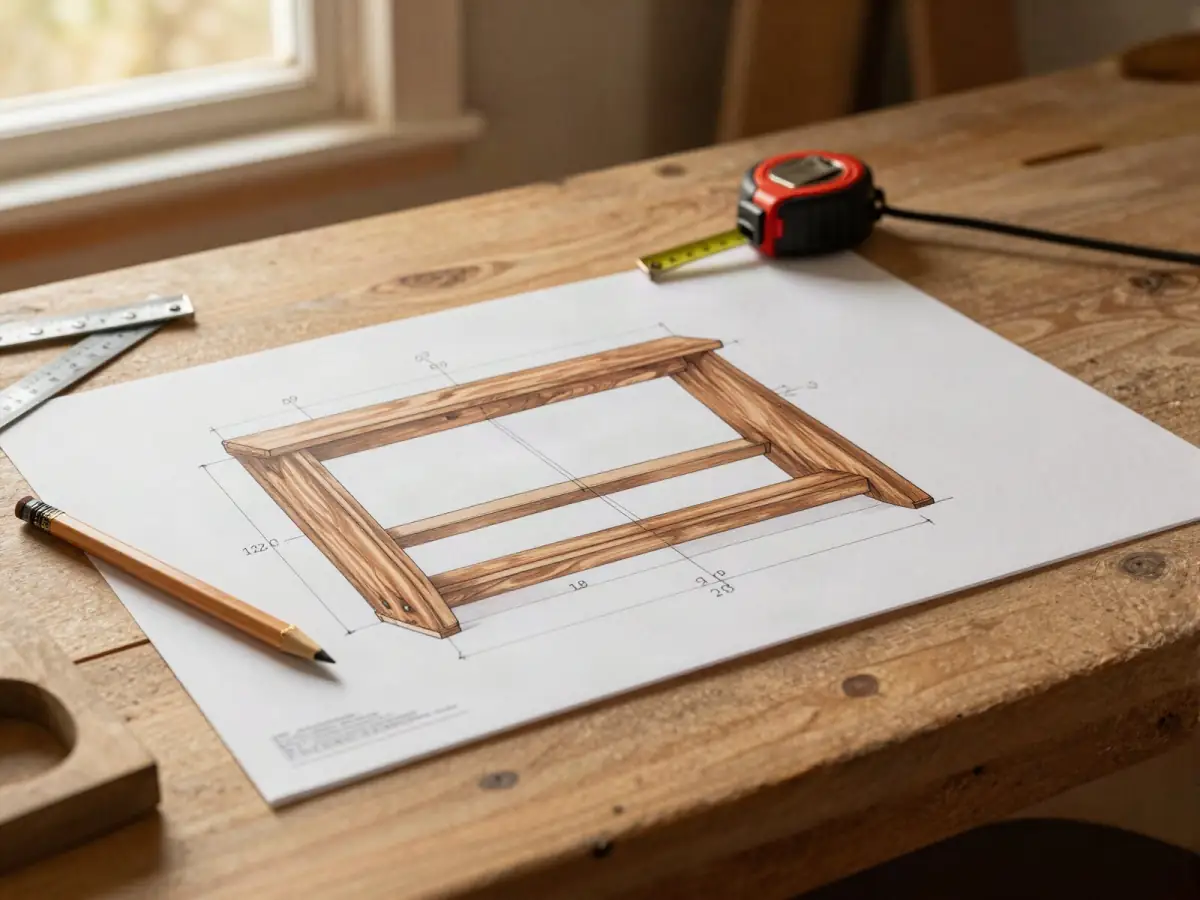
Use this as a checklist before you commit lumber and a weekend to any plan, free or paid:
| Element | Why it matters |
|---|---|
| Complete cut list (T x W x L, qty) | Prevents shortages and wasted boards |
| Dimensioned drawings for every part | No guessing at hidden sizes |
| Exploded view of assembly | Shows how parts relate and the order of steps |
| Joinery details with sizes | Tenon length, dado depth, screw locations |
| Tool list | Tells you up front if you need a tool you don't own |
| Material and hardware list | One trip to the store instead of three |
| Notes on wood movement | Fasteners and floating panels where needed |
| Step-by-step order | Avoids gluing up before a part can be drilled |
A plan missing two or three of these isn't useless, but expect to fill in the gaps yourself.
Where to get plans
Free sources: Many tool and lumber retailers, woodworking magazines, and hobby blogs publish free plans. Quality varies widely. Some are excellent and fully dimensioned; others are a photo and a rough sketch. Our comparison of paid vs free plans covers what to look for.
Paid single plans and magazine archives: Publications such as Woodsmith sell individual plans and archive access; check current prices on their site. See Ted's Woodworking vs Woodsmith plans.
Large paid libraries: Bundles with thousands of plans in one download. Ted's Woodworking is the best-known of these on ClickBank.
Ted's Woodworking: one option, with caveats
As we checked on Oct 9, 2026, the sales page offers Ted's Woodworking for $67 one-time at checkout. The vendor claims 16,000+ plans in PDF format (many with DWG files), delivered through a members area, plus four bonuses: a DWG/CAD viewer, 150 videos, a woodworking business guide, and complete woodworking guides. A custom plan request is also listed.
Some caveats worth knowing before you buy:
- Plan count: A 2014 UKWorkshop forum count found roughly 2,500 distinct plans, far fewer than the advertised figure.
- Uneven quality: Buyers report that some plans are detailed and others are thin, so run each one against the checklist above.
- Upsells: Optional checkout add-ons ($14.95, $9.95, $7.95) and post-purchase offers, including a $27/month membership, are not required.
- Reputation: Trustpilot showed 2.0/5 from 12 reviews in Oct 2026. ToolGuyd (2023) reported the "Ted" photo appears to be stock, and Woodshop News (2015) criticized the marketing.
If you want to look before paying, the vendor offers a free sample of 50 plans and a 440-page guide by email opt-in. For a fuller verdict, read is Ted's Woodworking worth it or our full review hub.
A big library only helps if you check each plan before you cut. The checklist matters more than the plan count.
refund
The sales page advertises a 60-day money-back guarantee, handled through ClickBank (clkbank.com). If you buy, open several plans for projects you actually want to build within the first weeks and check them against the checklist. Details are in our refund guide.
Paid link · opens the vendor's sales page.
The short version
Most failed projects come from missing information, not missing skill. Get a plan with a full cut list and dimensioned joinery, allow for wood movement, measure from one reference, choose joints that suit the load, and always dry fit. If you're starting out, a solid first build is a workbench; see our beginner workbench plans guide.
Frequently asked questions
Why do my woodworking projects wobble?
Usually because parts were cut to slightly different lengths, the assembly wasn't square at glue-up, or the joints rack under load. Cut matching parts at one setting with a stop block, check diagonals during glue-up, and use joints that resist racking.
What should a good woodworking plan include?
A complete cut list with thickness, width, length and quantity, dimensioned drawings for every part, an exploded view, joinery details, a tool list, a materials and hardware list, notes on wood movement, and a step-by-step order.
How much does wood move with humidity?
Movement along the length of a board is very small. Across the grain it can be significant on wide boards, and per the USDA Wood Handbook, tangential shrinkage is typically about twice radial shrinkage, which is why flatsawn boards cup more.
Are free woodworking plans good enough?
Some are excellent and fully dimensioned; others are a photo and a sketch. Run any plan through a checklist (cut list, dimensions, joinery, tool list) before buying lumber.
Do Ted's Woodworking plans fix these problems?
Not automatically. Buyers report uneven quality across the library, so check each plan against the checklist. The vendor advertises a 60-day money-back guarantee handled through ClickBank, so review plans for projects you want to build within that window.
Our research on the products mentioned
More from the blog
Best Woodworking Plan Libraries in 2026: 5 Options Compared
Ted's Woodworking, My Shed Plans, Ana White, Woodsmith Plans and Kreg plans compared on price, format, refunds and beginner-friendliness (Oct 2026).
How to Read a Woodworking Cut List (and Catch Mistakes Before You Cut)
How to read a woodworking cut list: nominal vs actual sizes, T x W x L, grain direction, a worked step stool example, and a 7-point check before you buy.
Is Ted's Woodworking Worth It in 2026? An Honest Buyer's Guide
Is Ted's Woodworking worth it? The real $67 cost, every optional upsell, cost-per-plan math, 6 objections answered, and a 30-minute refund-window test.